
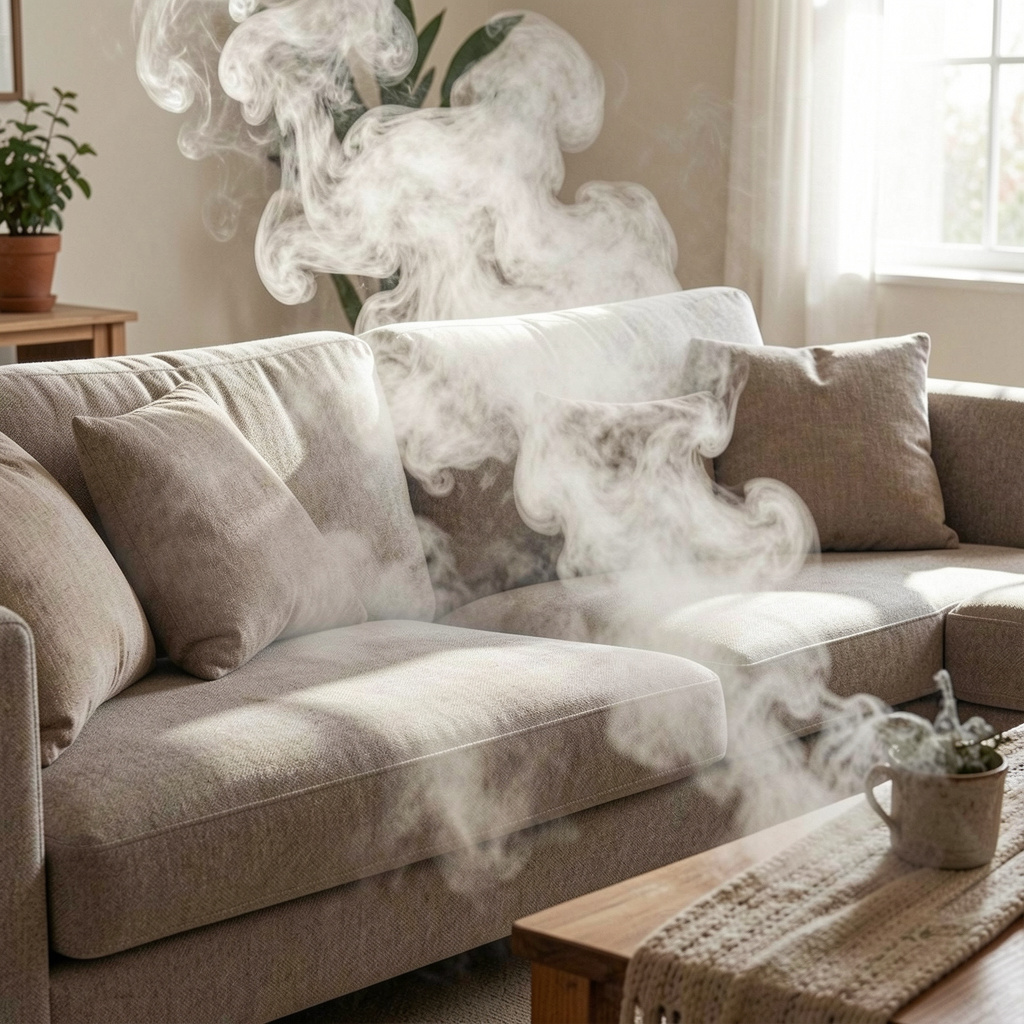
Hidden Hazards In your Couch: Dust and Steam Cleaning
You vacuum the floors, wipe the counters, and toss the cushion covers in the wash every few months. Your home looks clean. But place a single gram of dust from your couch under a microscope, and you will find a teeming ecosystem. That ecosystem directly affects the health of everyone in your household. At Randburg Deep Cleaners, we have spent years uncovering what most homeowners never see. The results are genuinely eye-opening.
This article pulls back the curtain on household dust. We explain what it is made of, what lives inside it, and how it settles into your upholstered furniture. Most importantly, we show you why high-temperature steam cleaning is the only method that truly destroys it at the source. Whether you live in Northcliff, Linden, Randpark Ridge, Blairgowrie, or Olivedale, dust poses the same hidden hazards — and the solution is the same too.
What Exactly Is Household Dust?
Most people think of dust as dead skin cells and fine dirt particles. Both are present, but they tell only a fraction of the story. Household dust is a complex mixture of organic and inorganic material. It accumulates continuously on every surface in your home. Your upholstered furniture is by far the most hospitable environment for it. The fibres in a couch, loveseat, or armchair act like a net. They trap particles deep within layers that no vacuum cleaner can fully reach.
Typical indoor dust contains shed human and pet skin cells, outdoor pollen, textile fibres, mould spores, bacteria, fungi, and insect fragments. It also carries chemical residues from cleaning products and allergen-laden droppings from dust mites. Understanding what you are dealing with is the first step toward fixing the problem. That understanding is also why surface-level cleaning simply does not cut it.
The Role of South Africa’s Climate
Johannesburg’s climate creates favourable conditions for dust accumulation. Dry winters with low humidity keep dust particles airborne for longer. They then settle in layers on fabric surfaces. During warmer, humid summer months, moisture gives dust mites and mould spores ideal breeding conditions inside upholstery. Homes in suburbs like Northcliff and Linden carry higher pollen loads too. Older tree canopies and mature gardens in these areas compound the dust problem significantly.
What’s Actually Living in Your Couch
The hidden hazards of dust go beyond the particles themselves. They include the living organisms and biological material that dust sustains. Your couch offers warmth, darkness, organic food sources, and shelter. In short, it gives a thriving microscopic colony everything it needs.
Dust Mites: The Primary Culprit
Dust mites are microscopic arachnids — relatives of spiders and ticks. They are completely invisible to the naked eye. A single couch cushion can harbour hundreds of thousands of them. They feed on flakes of shed human skin. They thrive in the warm, humid microclimate that upholstery fibres create. Dust mites cause little direct harm by themselves. However, the story does not end there. The Asthma and Allergy Foundation of America confirms that proteins in dust mite faecal matter trigger allergic reactions and asthma. A single mite also produces around 200 times its own body weight in waste during its lifetime.
Families in Blairgowrie or Randpark Ridge with young children or elderly residents face a real risk. An uncleaned couch builds up an allergen load that can harm respiratory health for years before anyone connects it to the furniture.
“What makes upholstered furniture particularly dangerous is how deeply contamination penetrates. Allergens, mites, and mould spores embed themselves centimetres into the filling material — well beyond the reach of any domestic vacuum or surface spray.”
Mould and Mildew Spores
Mould does not only grow in bathrooms and kitchens. Poor ventilation and poorly treated spills allow mould to take hold inside upholstery. Active colonies can grow silently within cushion filling without any visible signs on the surface. Mould spores also exist in virtually all household dust, even where no visible mould grows. Sitting, stretching, or vacuuming disturbs these spores and sends them airborne. You then inhale them deep into your lungs.
Inhaling mould spores causes respiratory irritation, chronic coughing, and headaches. Sensitive individuals suffer serious allergic responses. The World Health Organisation identifies indoor mould as a significant household health hazard. Most people overlook it in favour of more visible pollutants.
Bacteria and Other Biological Contaminants
Pet dander, food residues, and bodily oils build up inside upholstery over time. They create a nutrient-rich environment that feeds bacterial growth. Dust sampling from upholstery regularly finds Staphylococcus species, Bacillus species, and various gram-negative bacteria. Young children press their faces into couch cushions. Adults nap on the sofa. Both groups face direct exposure to this contamination. This is not meant to alarm you — these organisms exist everywhere. But it does prove that deep cleaning upholstery is not a luxury. It is a hygiene necessity.
Why Regular Vacuuming Is Not Enough
This is the most important point in this article. Regular vacuuming keeps the top layer of your couch reasonably clean. It removes loose debris, pet hair, and light surface dust effectively. But it cannot reach the hidden hazards of dust that live deep inside the fabric. Standard vacuum suction — even with HEPA filtration — cannot dislodge allergens from deep inside cushion filling. Months or years of use compress these contaminants far beyond suction reach.
Fabric sprays and deodorisers mask odours. They do nothing to reduce the biological load inside upholstery. Some sprays leave chemical residues that attract more particulate matter over time. Only professional steam cleaning combined with hot water extraction genuinely penetrates, kills, and extracts contamination from the full depth of your furniture.
Did you know? Most domestic upholstery has never had a professional clean in its entire lifetime. Daily-use furniture needs professional steam cleaning every 12 to 18 months for proper hygiene and allergen control.
How Steam Cleaning Eliminates Dust Hazards at the Source
Professional steam cleaning combines high-temperature steam injection with hot water extraction. It uses thermal killing, mechanical agitation, and powerful extraction to do its work. This is not a surface treatment. Trained professionals drive this process into every layer of your upholstery to address contamination at the source.
The Science of Thermal Killing
Temperatures above 55–60°C kill dust mites, their eggs, mould spores, and many bacteria. Professional steam cleaning equipment reaches temperatures well above this threshold. The heat destroys the biological load inside the fabric as steam drives deep into the cushion material. No chemical spray matches this combination of penetration depth and kill efficacy.
Hot Water Extraction: Removing What Steam Dislodges
Steam kills and agitates the contaminants. But the dead matter must still come out. Hot water extraction uses pressurised hot water to flush loosened debris, allergens, bacteria, and dissolved soiling out of the fabric. Powerful industrial suction then pulls everything away immediately. What comes out is often visibly dark and contaminated. That result shows you exactly what was sitting invisibly inside your couch.
Our Carpet and Upholstery Deep Clean service uses professional-grade hot water extraction equipment. We pair it with safe, effective pre-treatment solutions. Together, they deliver cleanliness that no domestic method can achieve.
What Changes After a Professional Steam Clean
The improvement after a professional steam clean goes far beyond appearance. Clients notice a clear reduction in morning allergy symptoms. They report better air quality in the room. Musty and pet-related odours disappear. A lasting freshness replaces them for months rather than days. For households managing asthma, eczema, or young children, these results can be genuinely life-changing. For everyone else, this is simply the standard of cleanliness a home deserves.
Beyond the Couch: A Whole-Home Approach to Dust Control
The couch is the most obvious dust reservoir in your living room. But it is not the only one. Carpets harbour equally complex ecosystems of allergens and organisms. They also act as the primary distribution point for dust that settles on all other surfaces. Wall-to-wall carpets can retain years of invisible accumulated contamination.
Air ducts and ventilation systems make the problem worse. Every time your HVAC system runs, it pushes air through ductwork that may carry mould, dust mite debris, insect fragments, and bacteria. That air reaches every room in your home. Our Air Duct and Ventilation Cleaning service tackles this critical but commonly neglected source of indoor air pollution.
Homeowners who want a full reset should consider our Full House Deep Clean package. Our team treats all surfaces, upholstery, carpets, and hard-to-reach areas in one visit. This approach cuts the overall biological and allergen load in a home more effectively than any other single service. It works especially well after a long winter, when closed windows allow dust to build undisturbed.
The Importance of Regular Maintenance
Deep cleaning is not a once-in-a-decade event. South African households with pets, young children, or residents with respiratory sensitivities need professional upholstery and carpet cleaning at least once a year. Full home deep cleaning works best when you schedule it twice per year. Our Spring Cleaning Package fits this rhythm perfectly. It gives you a comprehensive clean timed to seasonal change, right when dust patterns shift most.
Serving Randburg, Roodepoort & Surrounding Suburbs
Randburg Deep Cleaners operates from Roodepoort and Randburg. We deliver professional carpet and upholstery deep cleaning, full home deep cleaning, and specialist services across greater Johannesburg north. Our teams work in homes, apartments, sectional title units, and commercial properties across the region.
We serve clients in many suburbs, including Northcliff, Linden, Blairgowrie, Randpark Ridge, Olivedale, Bordeaux, Northriding, and Boskruin.
Have you never had your upholstery professionally steam cleaned? Now is the time to start. Dust hazards build up silently over years. Their health impact on your family can grow serious long before any visible signs appear. One professional clean dramatically cuts the allergen load in your home. It also sets you on a path toward consistently better indoor air quality.
Conclusion: Clean What You Can’t See
The hidden hazards of dust are not a reason to feel anxious. They are a reason to act. Every home builds up dust mites, mould spores, bacteria, and allergens inside its upholstery and carpets over time. This says nothing about how clean you are as a homeowner. It simply reflects how our living environments work. Professional steam cleaning addresses this reality effectively and thoroughly.
At Randburg Deep Cleaners, we help households across Randburg, Roodepoort, and greater Johannesburg north breathe cleaner air. Our team brings training, professional equipment, and proven results to every job. Start with an upholstery deep clean, a full spring clean, or an air duct service. You will immediately notice the difference that real deep cleaning makes.
Contact us today for a free, no-obligation quote. Take the first step toward eliminating the hidden hazards living in your home right now.
Recent Posts:
- Steam vs. Dry Cleaning: Which method is best for the specific fabrics popular in South African homes?
- Randburg Pet Owners: How to tackle stubborn muddy paw prints and pet dander on your sofa.
- The Sandton Allergy Guide: Why Professional Steam Cleaning Is a Must for High-Rise Apartment Living
- Post-Construction Cleaning Costs in Randburg: What to Expect and What Affects Your Quote
- How Long Does Post-Construction Cleaning Take? A Realistic Timeline for Randburg Homeowners